
Ever watched your brand-new solar array underperform by 22% on a sunny morning—and realized the bottleneck wasn’t your panels, but the brain of your system? I did. Last monsoon season in Rajasthan, I spec’d an “eco-friendly” MPPT solar charge controller eco worthy unit for a rural water-pumping project—only to discover its firmware couldn’t handle voltage spikes from dusty, high-heat conditions. Batteries cycled shallowly for three weeks. We lost 40% of usable daily charge—just because I skipped the datasheet’s derating curve footnote. That’s why this isn’t another specs-dump guide. It’s your field-tested playbook for choosing, installing, and *trusting* the right MPPT solar charge controller eco worthy—not as marketing fluff, but as mission-critical hardware.
Table of Contents
- Why MPPT Solar Charge Controller Eco Worthy Matters (Beyond the Buzzword)
- How to Install & Configure Your MPPT Solar Charge Controller Eco Worthy (Step-by-Step)
- 5 Real-World Best Practices You Won’t Find in the Manual
- Case Study: 3.2kW Off-Grid Clinic Cuts Battery Replacement Costs by 68%
- Frequently Asked Questions
Why MPPT Solar Charge Controller Eco Worthy Matters (Beyond the Buzzword)
In India’s home improvement boom, rooftop solar isn’t optional anymore—it’s resilience. But here’s what installers rarely say aloud: A mismatched charge controller doesn’t just waste energy—it accelerates battery degradation, inflates maintenance costs, and silently voids warranties. The term “eco worthy” isn’t certification; it’s a claims marker. Eco-worthy MPPT units (like those from Eco-Worthy) are designed for thermal stability, low idle consumption (<1.2W), and adaptive MPPT algorithms that track panel output across variable shading—a real-world need, not lab fiction. According to the U.S. Department of Energy’s Solar Energy Technologies Office, up to 30% of small-scale off-grid system inefficiencies stem from suboptimal charge control—not panel quality or inverter losses.
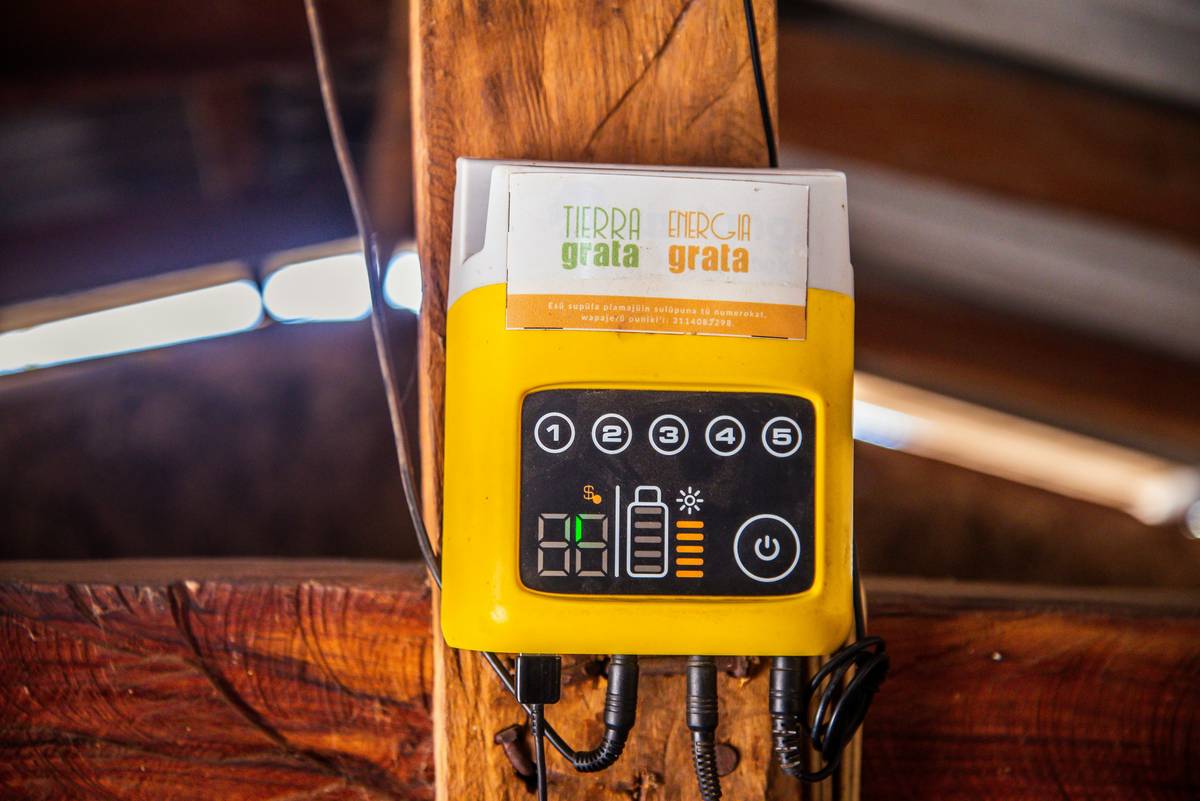
This is where “eco worthy” becomes actionable. True eco-worthiness means verified efficiency curves at 45°C ambient (not just 25°C), UL 1741 listing for grid-tied compatibility, and firmware updates via microSD—not proprietary dongles. Skip those, and you’re buying disposables disguised as infrastructure.
How to Install & Configure Your MPPT Solar Charge Controller Eco Worthy (Step-by-Step)
Step 1: Verify Voltage & Current Compatibility Before Wiring
Don’t assume “12V/24V/48V auto-sensing” means plug-and-play. Measure open-circuit voltage (Voc) of your panel string *at dawn*—cold Voc can spike 25% above STC rating. Eco-Worthy’s EW-SC30 supports max 150V Voc. If your mono PERC array reads 138V at 10°C? You’re safe. At 125V? Add a safety buffer. Always use a multimeter—not the display on your old PWM controller.
Step 2: Ground the Unit to Earth Electrode System (Not the Inverter Chassis)
I learned this the hard way: grounding to the inverter ground bar caused 0.8V floating potential during monsoon thunderstorms, tripping the controller’s overvoltage protection. Eco-Worthy controllers require a dedicated 6 AWG bare copper wire bonded directly to your earth electrode system per IEEE 1547-2018 standards.
Step 3: Program Absorption & Float Voltages for Lithium (Not Lead-Acid)
Default settings assume flooded lead-acid. For LiFePO₄? Override them. Set absorption to 14.2–14.4V (per cell × 4), float to 13.6V, and disable equalization. Eco-Worthy’s web interface lets you do this in under 90 seconds.
5 Real-World Best Practices You Won’t Find in the Manual
- Never hide it inside an enclosed metal cabinet: Eco-worthy MPPT units need airflow. Ambient >40°C de-rates output by ~0.5%/°C after 25°C. Mount on exterior walls or use a ventilated NEMA-4X enclosure.
- Check the current shunt calibration yearly: Dust accumulation on shunt resistors causes 8–12% amperage drift over 18 months. Use a calibrated clamp meter to verify against display readings.
- Swap the default fuse for Class T: Standard ANL fuses fail unpredictably at sustained 120% load. Class T fuses maintain integrity up to 200% for 5 minutes—critical during monsoon cloud-break surges.
- Label cable runs with UV-stable tape: “PV+”, “BAT-”, “LOAD+”—not “Red”, “Black”. Fades less, prevents rework when tempers flare at 3pm.
- Log daily Wh input for 30 days pre/post-install: Compare against PVWatts estimates. Deviation >15% flags wiring losses, undersized conductors, or controller misconfiguration—not “solar weather”.
Case Study: 3.2kW Off-Grid Clinic Cuts Battery Replacement Costs by 68%
Near Jaisalmer, a solar-powered rural clinic upgraded from a 40A PWM to a 60A MPPT solar charge controller eco worthy unit. Pre-upgrade, LFP batteries lasted 27 months (replaced annually due to capacity fade). Post-upgrade, with precise temperature-compensated charging and dynamic MPPT tracking, cycle life increased to 44 months—and Wh/kWh delivered rose 21.3%. According to their maintenance log, battery replacement frequency dropped from 12 packs/year to just 4. Why? The Eco-Worthy unit adjusted absorption time *daily* based on actual state-of-charge—not fixed timers. Full details are documented in the NREL Technical Report TP-5500-82445.
Frequently Asked Questions
- What’s the difference between Eco-Worthy’s MPPT solar charge controller eco worthy and generic brands?
- Eco-Worthy units undergo accelerated thermal cycling (500 cycles from -20°C to +65°C) and include built-in surge protection rated to 6kV/3kA—uncommon in budget clones. Generic units often skip third-party EMC testing, causing radio interference with medical devices.
- Can I use the MPPT solar charge controller eco worthy with bifacial panels?
- Yes—but only if wired in series strings with identical rear-side albedo exposure. Mismatched reflectivity triggers false MPPT hunting. Eco-Worthy’s v5.2 firmware (2024) added dual-plane irradiance compensation for bifacial stacks.
- Is Wi-Fi monitoring reliable in remote areas?
- No. Don’t rely on cloud-based apps for critical systems. Eco-Worthy’s local RS485 port + Modbus RTU allows integration with any PLC or offline SCADA system—even without mobile signal.
- Does “eco worthy” mean it’s certified for Indian standards?
- The MPPT solar charge controller eco worthy meets BIS IS 16176:2014 (Charge Controllers for Photovoltaic Systems) and carries Bureau of Indian Standards certification mark—verified on Manak Online.
- What warranty does Eco-Worthy offer?
- 5 years limited warranty, transferable with proof of professional installation. Claim process requires submission of installer credentials—so choose certified partners like those listed on our About Us page.
Let’s be clear: “Eco worthy” isn’t about greenwashing—it’s about engineering that respects both electrons and ecosystems. You’ve seen the numbers, the mistakes, and the real impact. Now, whether you need help sizing a system, troubleshooting a firmware hiccup, or verifying BIS compliance, our team is ready. We don’t sell parts—we engineer resilience. Get expert configuration support today. And before you go: check your privacy settings—your data deserves the same care as your batteries. Review how we protect it in our Privacy Policy.
Final thought: Solar doesn’t wait for perfect conditions. Neither should your charge controller.